
One language, many nodes
Field Pixel, Field Synth, Field Effect, Field Notes, Field Primitive and Field Modifier share one syntax. Types and rates are inferred, so a sine reads the same on the GPU and at 48 kHz.
Write what a node does. Field is Infinite's own small language: one program can be a shader, a synth, an effect, a note pattern or a mesh deformer, and the compiler works out where it runs.
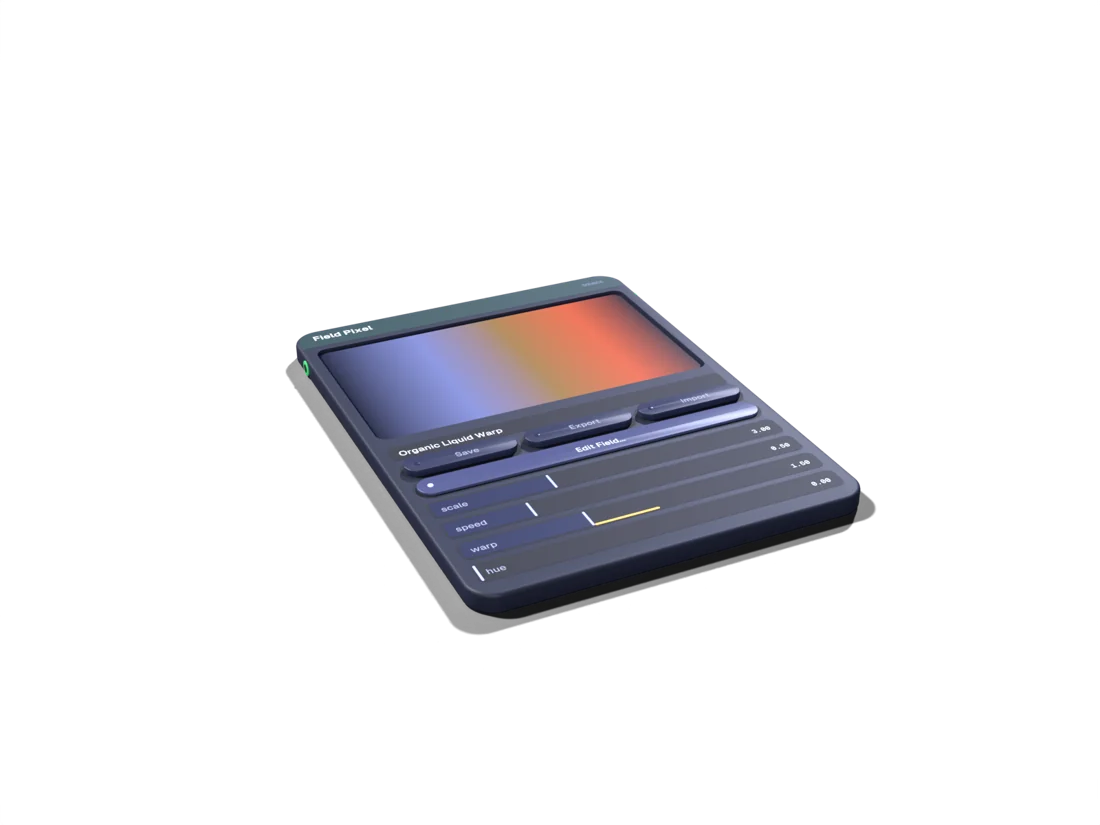 live shader · move the pointer
Field Pixel, Field Synth, Field Effect, Field Notes, Field Primitive and Field Modifier share one syntax. Types and rates are inferred, so a sine reads the same on the GPU and at 48 kHz.
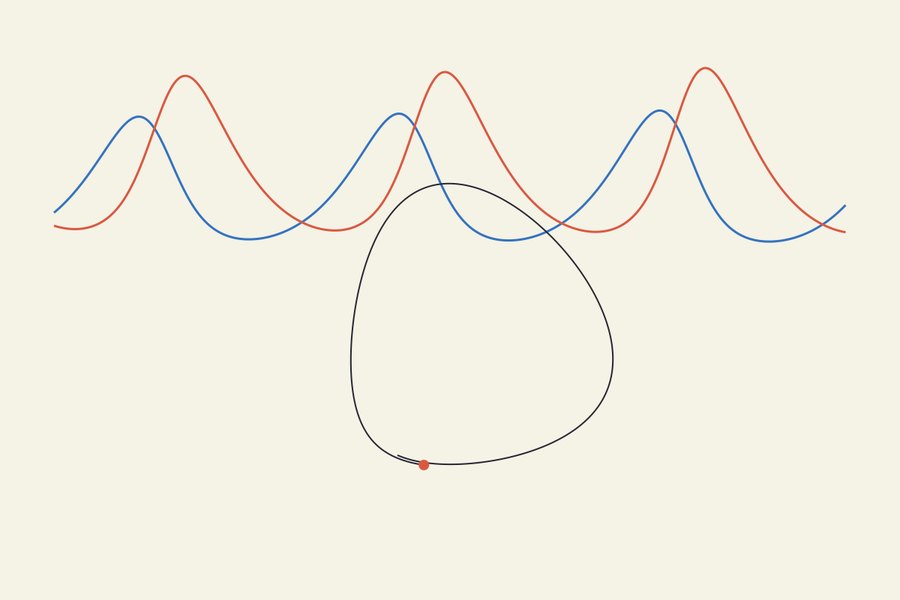
A Sketch node draws 2D images from JavaScript, and a 3D sketch builds meshes. The library has Lorenz and Clifford attractors, Lotka-Volterra and Rule 110, running live.
Modulate any knob, script a patch over OSC on 127.0.0.1:9100, or render it headless from the command line. Patches are plain text.
Each of these nodes takes a few lines of Field or JavaScript.


screenshots from the app, shown at their own size
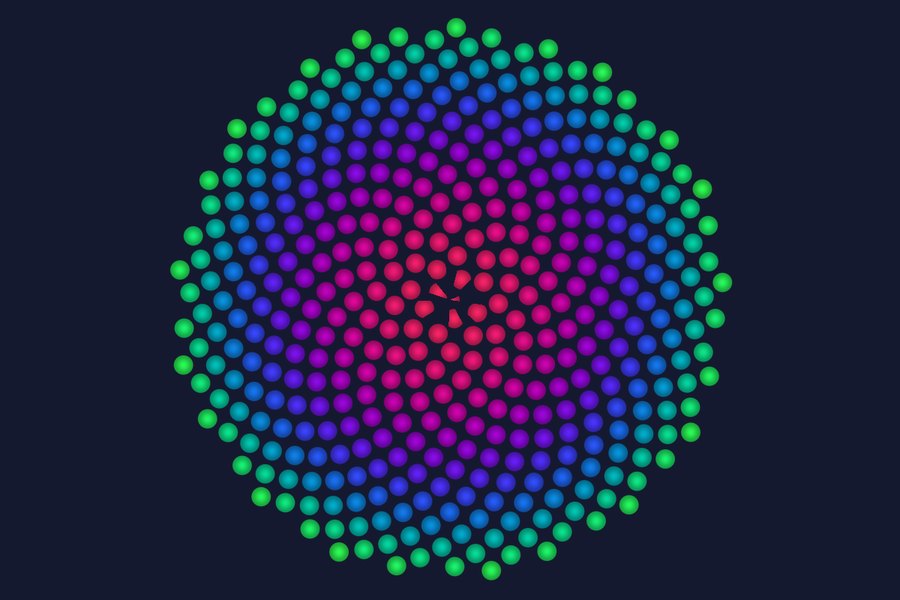
This is the Phyllotaxis Bloom preset from the library: each seed sits at the golden angle from the last. Change the seed count and the turn, the two params the preset exposes.
param float seeds = 420.0 [60.0, 1500.0];
param float turn = 8.0 [-90.0, 90.0];
// ...
sc = 0.46 / sqrt(seeds);
rot = turn * 0.0174533 * t;
sa0 = kk0 * 2.399963 + rot;   // golden angle
Abridged Field source from the Phyllotaxis Bloom preset. The canvas is the same formula as WebGL.
Each one is a free patch that runs live.
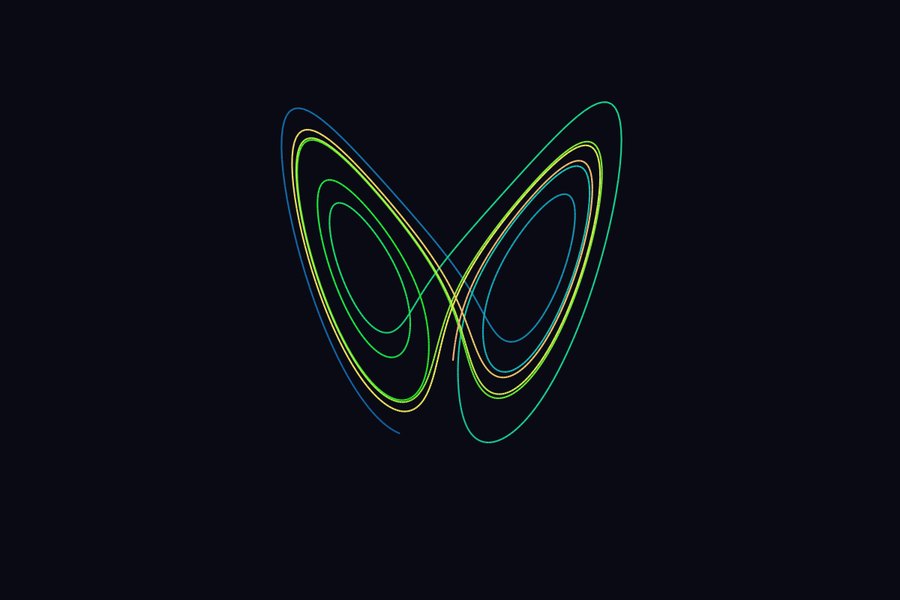
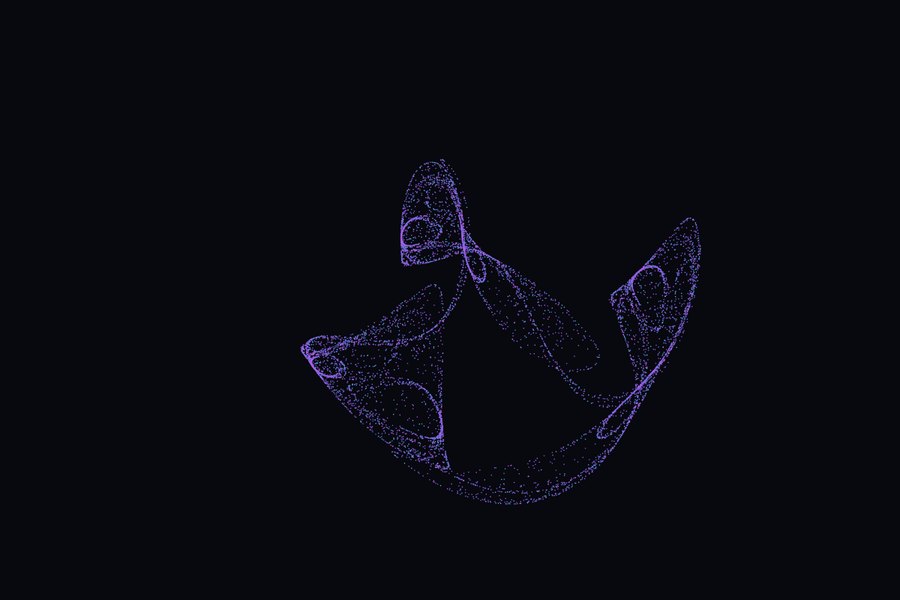
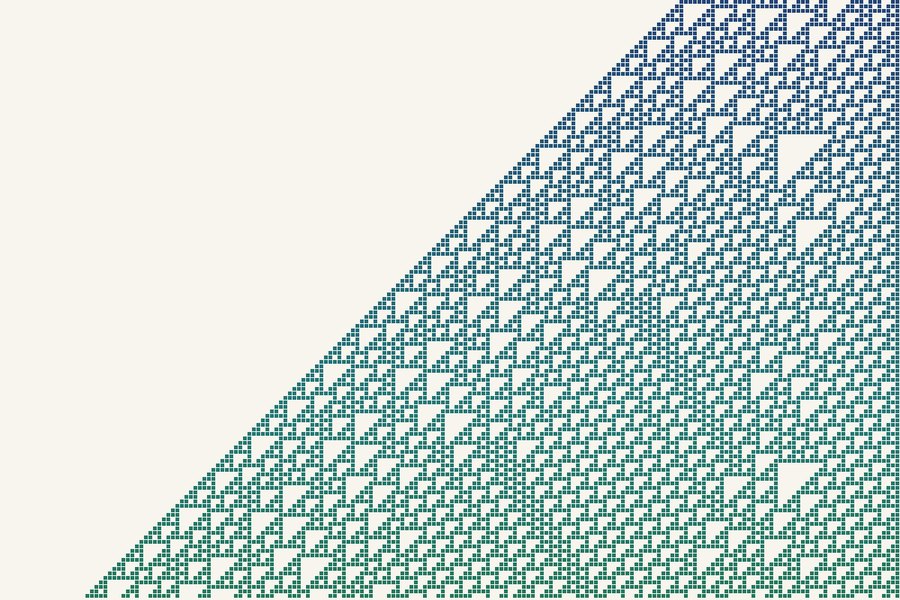
Each one is a free patch you can download and open.